
Abstract Translating complex laboratory procedures to the point-of-care (POC) requires more than miniaturizing components; it demands a deep understanding of the chaotic, resource-constrained environments in which these systems operate.
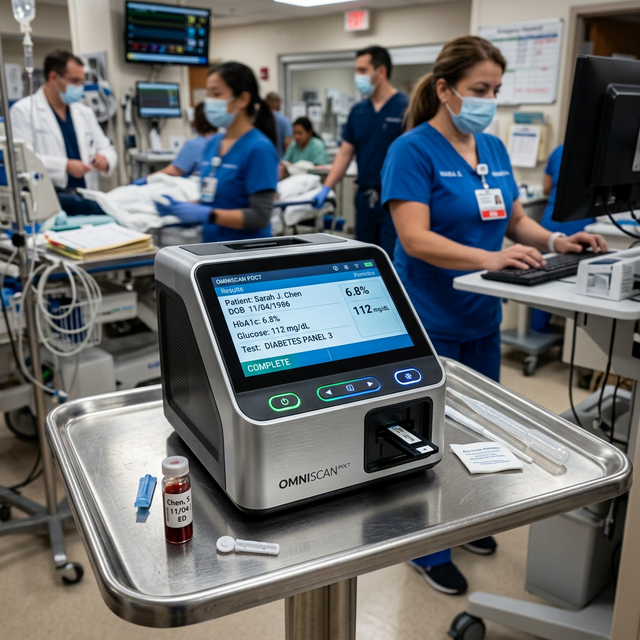
The Reality of the Clinical Setting Unlike controlled core laboratories, POC settings—such as emergency departments and field clinics—are characterized by high cognitive load, limited physical space, and variable ambient conditions. Systems designed for these spaces must prioritize extreme usability and robustness.
Engineering for Zero-Training Operation At BiQadx, hardware and UI/UX design are deeply intertwined. The Dr. POCT platform was engineered with a "zero-training" philosophy.
- •Poka-Yoke Consumables: Cartridges and intake mechanisms are physically keyed to prevent incorrect insertion.
- •Ambient Stability: Utilizing advanced polysilicate biopolymers and lyophilized reagents removes the need for cold-chain logistics, a common failure point in rural deployments.
- •Guided Intelligence: The on-board Intelligence Stack provides real-time, step-by-step visual feedback during the critical sample-loading phase.
By designing hardware that anticipates and mitigates human error under duress, we ensure that diagnostic fidelity is maintained outside the traditional lab.
Published: BiQadx Engineering Consortium